
2017
mixed media
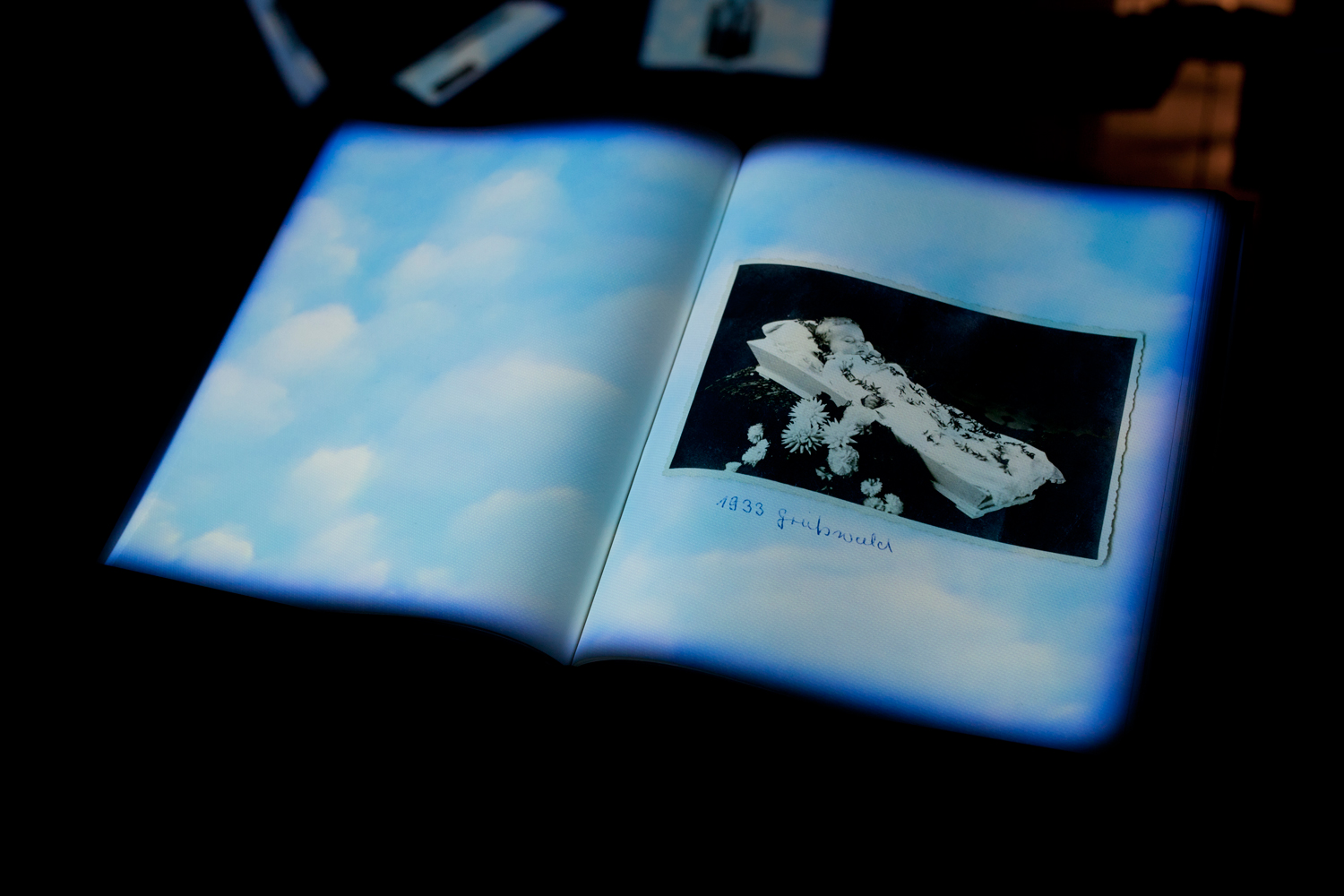
While in residency in Berlin I came across a photo album at a flea market. The first page was a photo of a young child in a coffin. The album follows the different stages in the lives of twin sisters, who had evidently survived the losses of an older sister and brother. The deceased are commemorated at the start of the album, and then the album follows the twins' lives into adulthood. But by positioning their lost brother and sister as a kind of preamble, I read it as a declaration that the editor, the younger twin, felt that their deceased brother and sister remained with them throughout their lives: that the dead and the living normally coexisting was an integral part of who they were and who they became.
Cryptophasia is a secret shared language between two speakers, which typically develops between very young twins. As the twins learn to join society cryptophasia thins, and is eventually replaced by the language of the greater society they exist within.
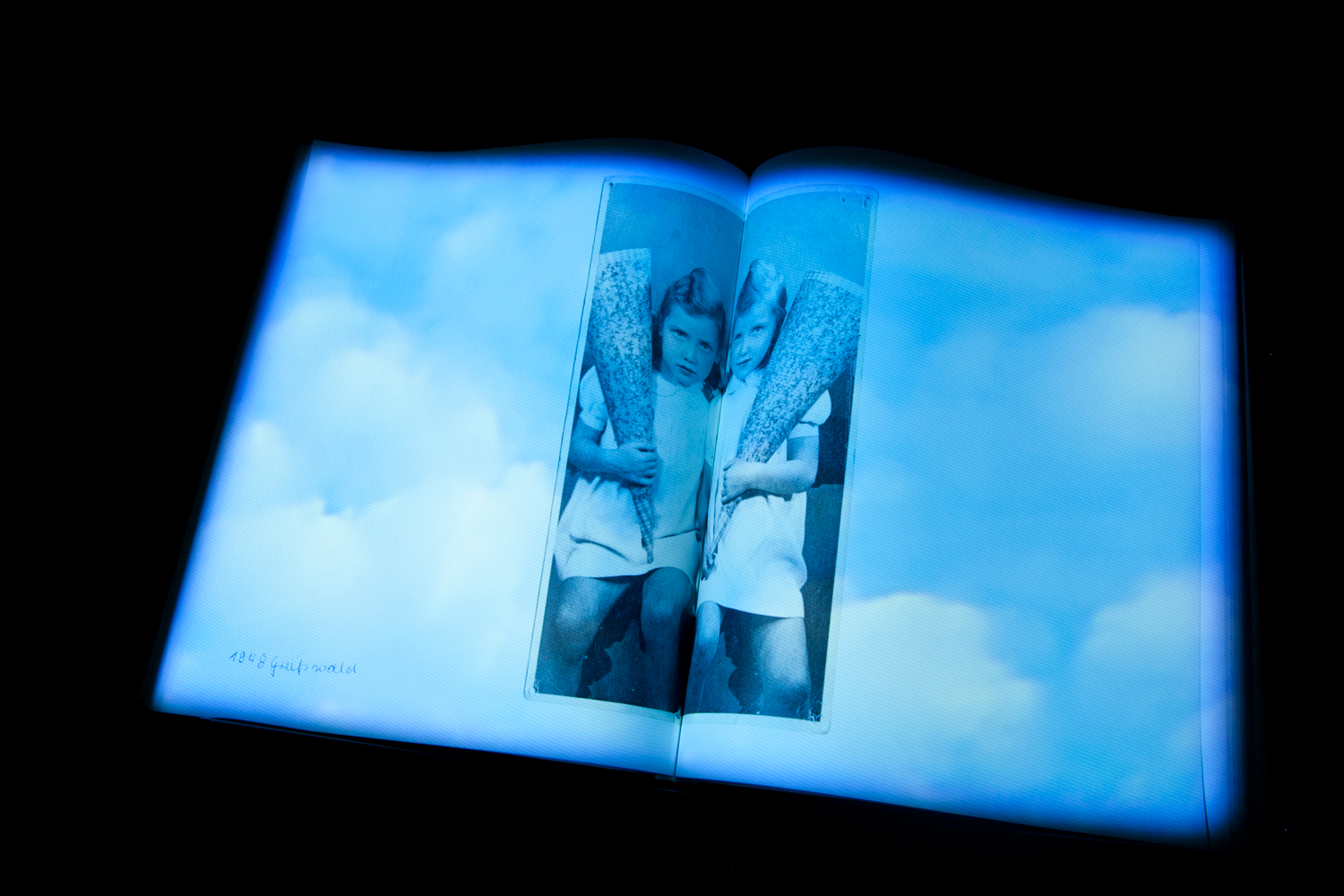
Monozygotic, identical, twins already have an interesting way of life, growing up with a mirror self. In the album the images of the individual sisters are positioned on opposing pages. Each photographic pairing suggested a signpost from at least two perspectives at the same time, each unique and yet bound in ways indecipherable to the rest of the world. How could they possibly have grown up absent an awareness of parallel existences? And in these women's cases, there was the addition of those there in absentia.
The photos of the twins continue to adulthood, until they eventually meet and marry very different men.
Taking this album as a point of departure, I attempted to focus on complimentary dimensions of co-existence, echoes of our experiences of our mirror selves, here and absent.
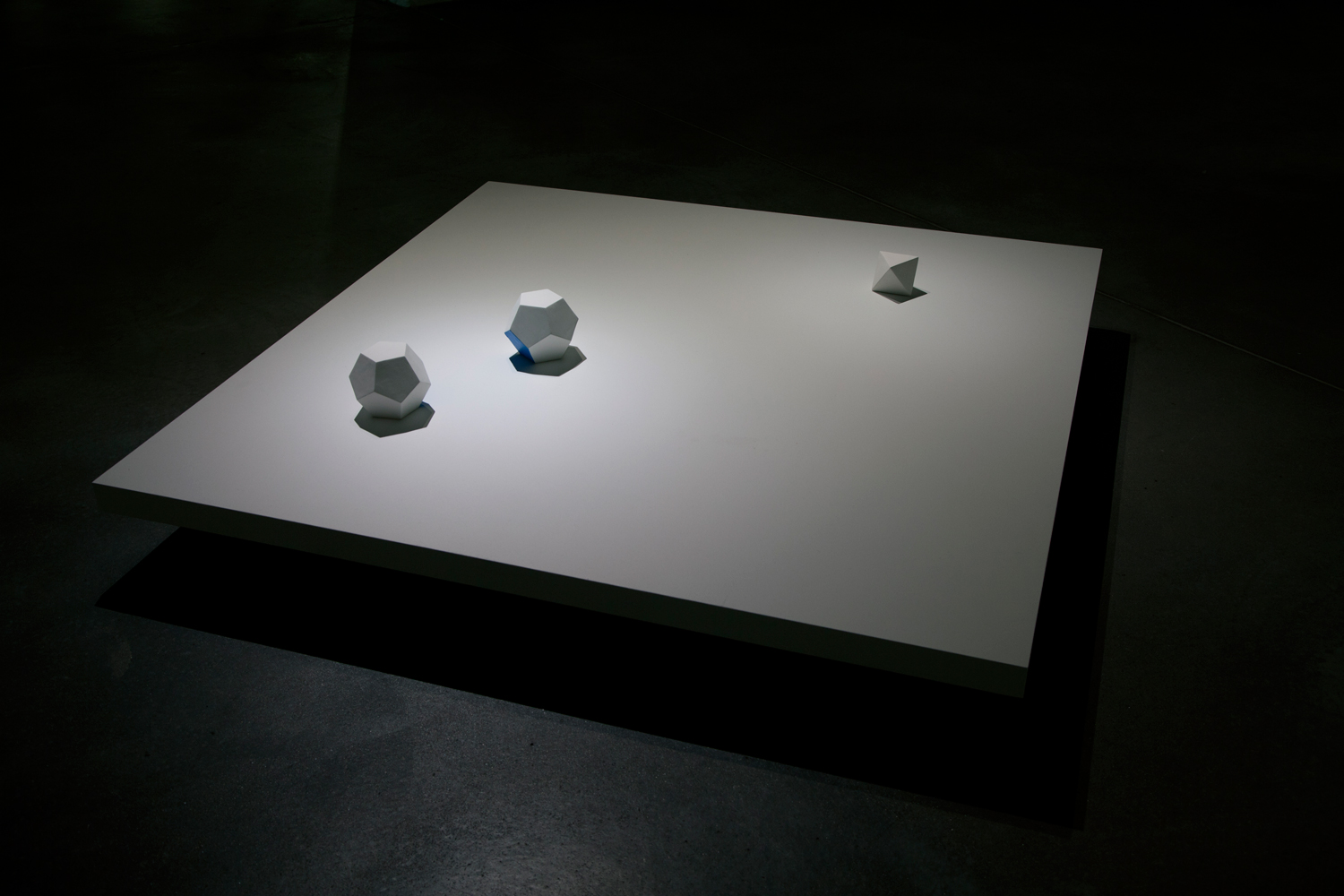
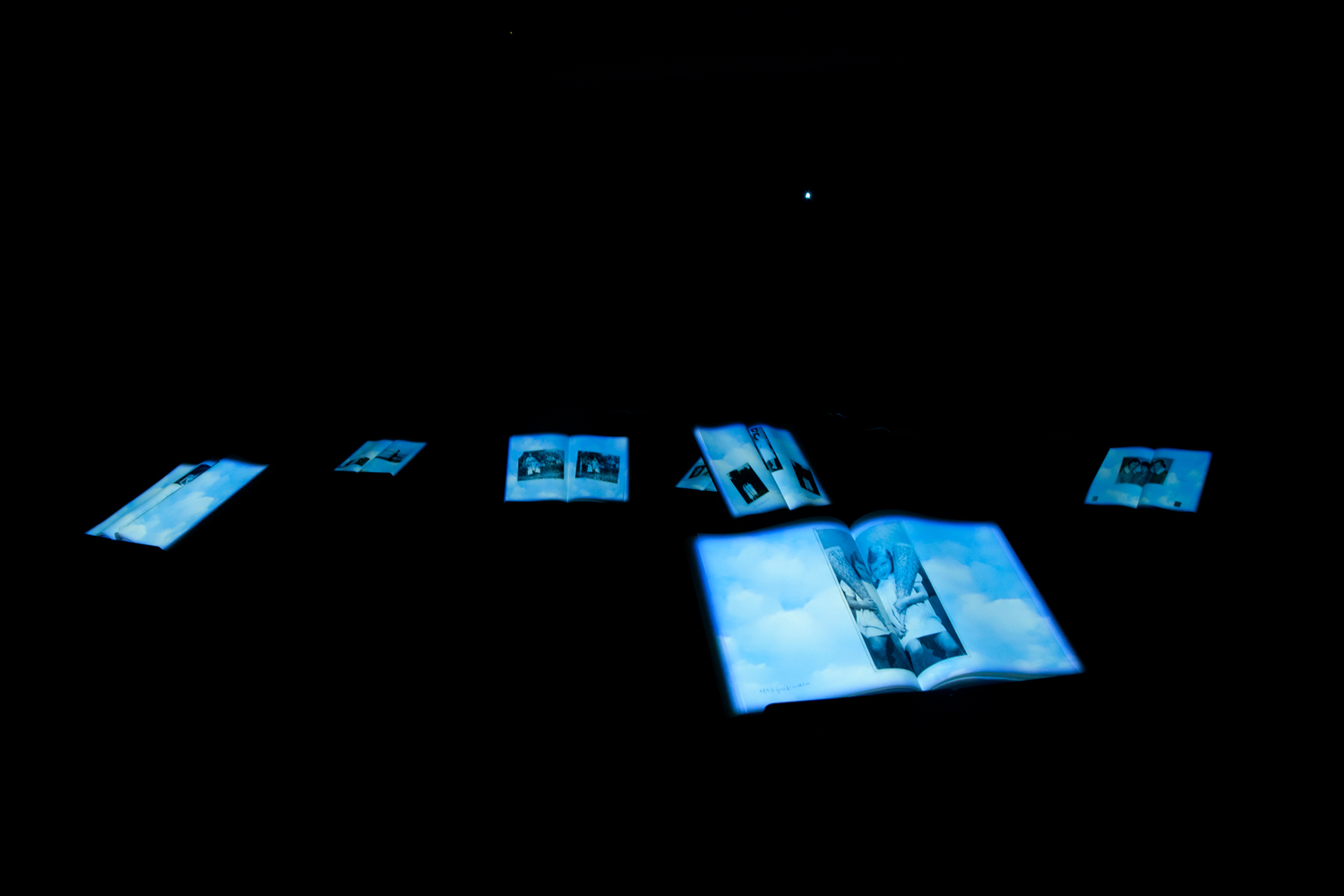
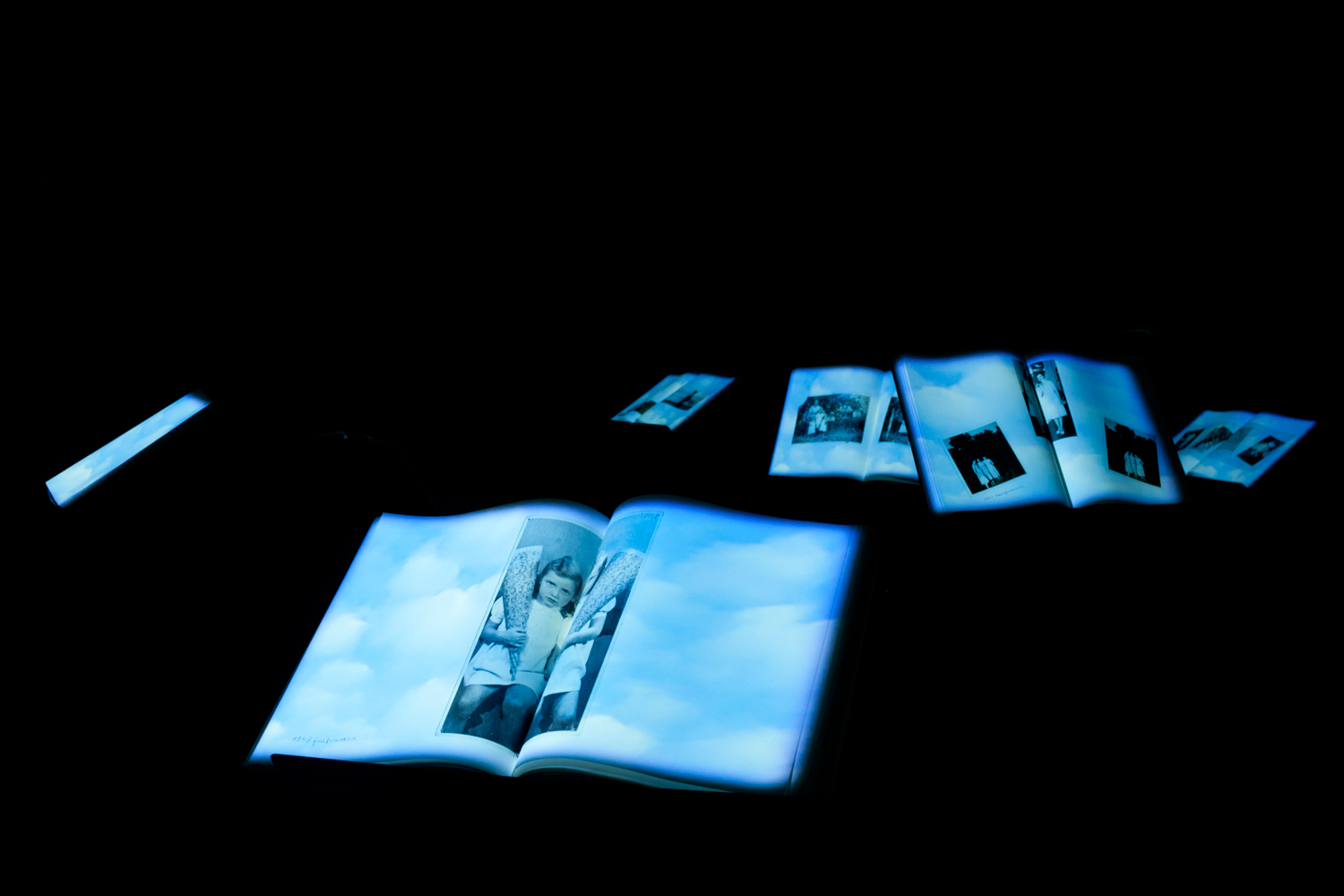
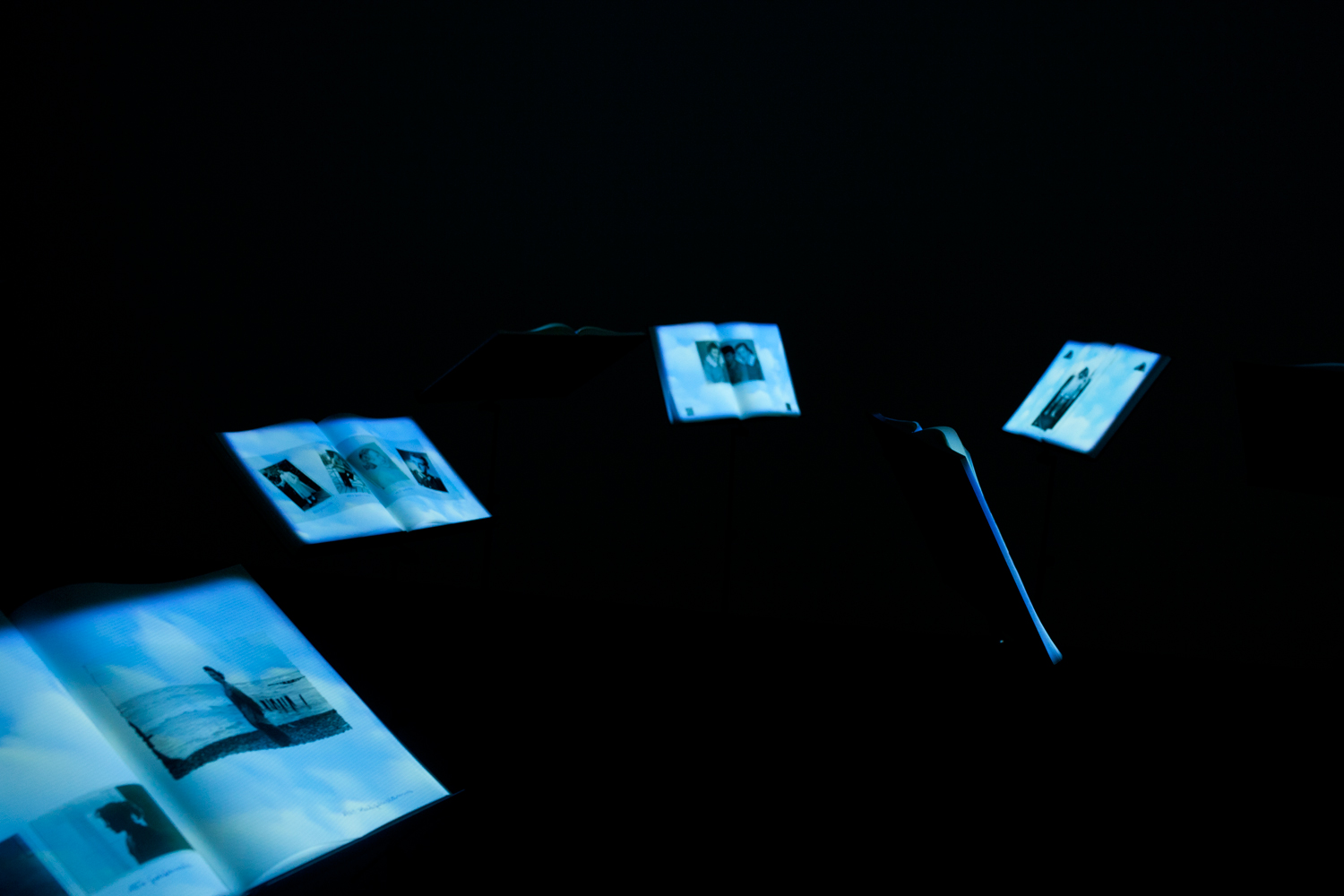
I divided the album into 12 sections, printing the twins on opposing sides, the central book binding serving as a framing membrane between them. The 12 books I produced are blank except for the open pages, representing the infinite before and after those moments depicted. Twelve figures opposing, one on each side, reflecting and resonating with one other, creating a state of twelve complementing moments. And an octahedron representing the deceased.
The album states that the twins were born in 1933 in Greifswald, birthplace of Caspar David Friedrich. In Friedrich's German Romantic landscapes, nature is both a reflection and a threat of the metaphysical. The tiny human figures represent humans' powerlessness in the face of nature—the existence of something outside of human agency. Referencing Friedrich's paintings of floating clouds, I decided to use projections of clouds as a connective reference which is nevertheless ambivalent about temporal events per se. Since the dawn of humanity, clouds have unceasingly remained unceasing: none ever existing long enough to signal anything but ephemerality.
I projected a video of clouds above them to free the frozen images on the page. Clouds form free shapes. How can we say that identical twin clouds don't occur? Perhaps we just don't see them. Just as we don't see many things.
But even if identical clouds do exist, they wouldn't retain their shape. And this indicates photography. There are moments of punctuation, which separate beginnings and endings, breaks from other times, like clouds changing shape, intersecting and separating. Such moments, which stand out from other times, exist within us, and photography creates and etches them in our memories.